
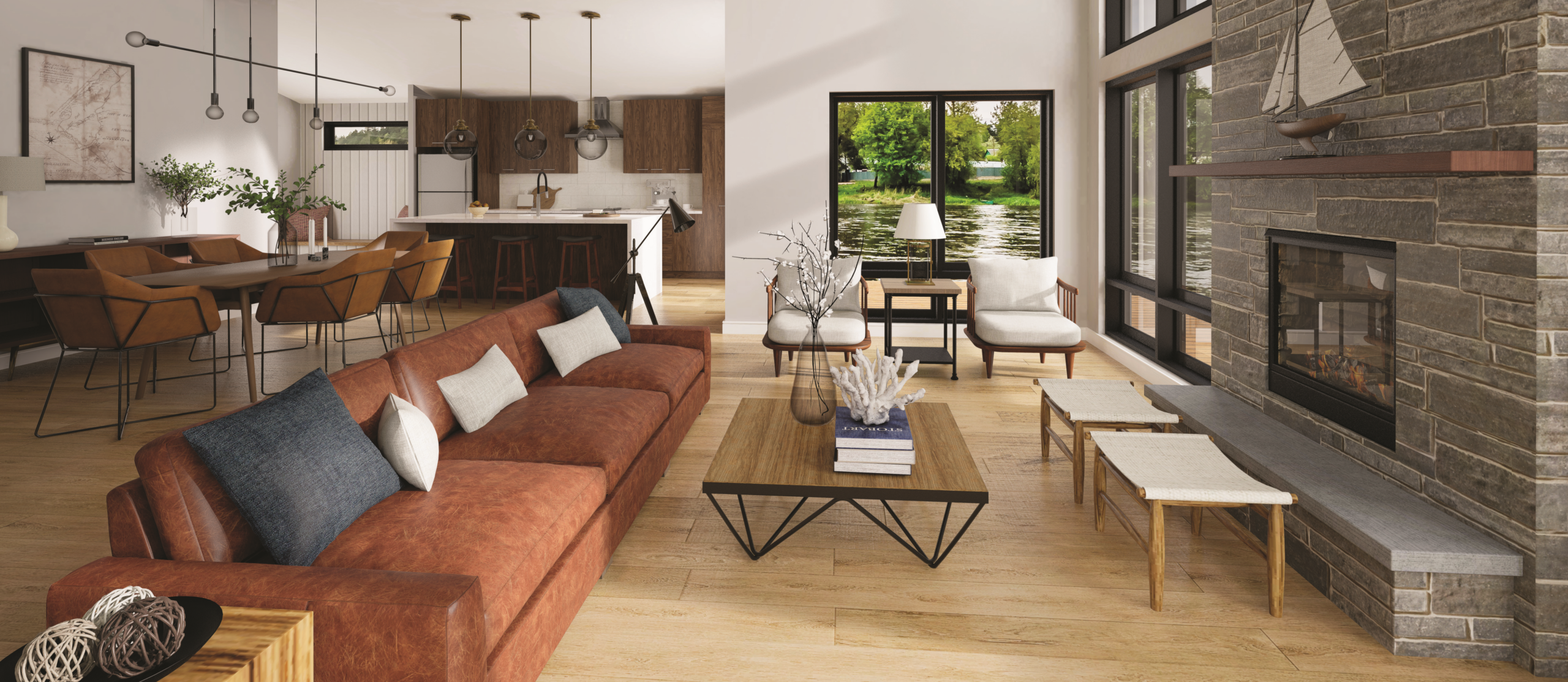
The world of home design is evolving rapidly, with architects, designers, and homeowners embracing innovative concepts and materials. In this article, we explore some of the cutting-edge choices in modern design that are redefining the future at home.
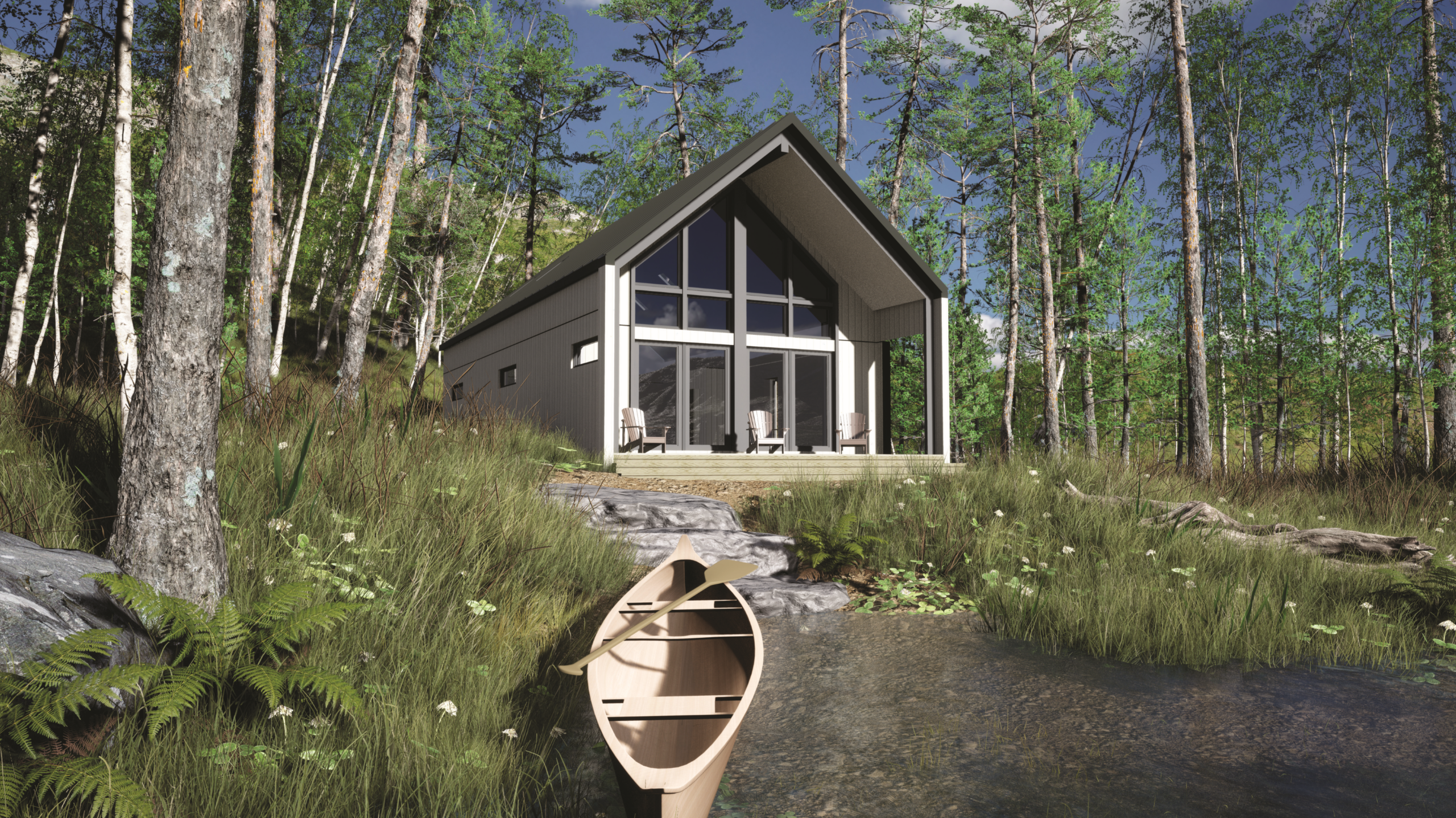
1. Geometric Rooflines:
When planning a modern home, the roofline becomes a defining exterior element that shapes the home’s architectural character. In recent years, waterfall rooflines have emerged as a standout contemporary choice. This sleek profile, where the roof plane continues seamlessly down the exterior wall, creates a sculptural frame around the home. The effect delivers a bold visual statement while also supporting practical benefits such as improved rainwater management.
Other modern roof approaches include mono‑slope designs that emphasize clean, directional geometry, as well as profiles with extended overhangs that enhance shading. Many of these contemporary looks are achieved using standing seam metal roofing paired with minimal overhangs, creating a purposeful connection between roof and siding materials.
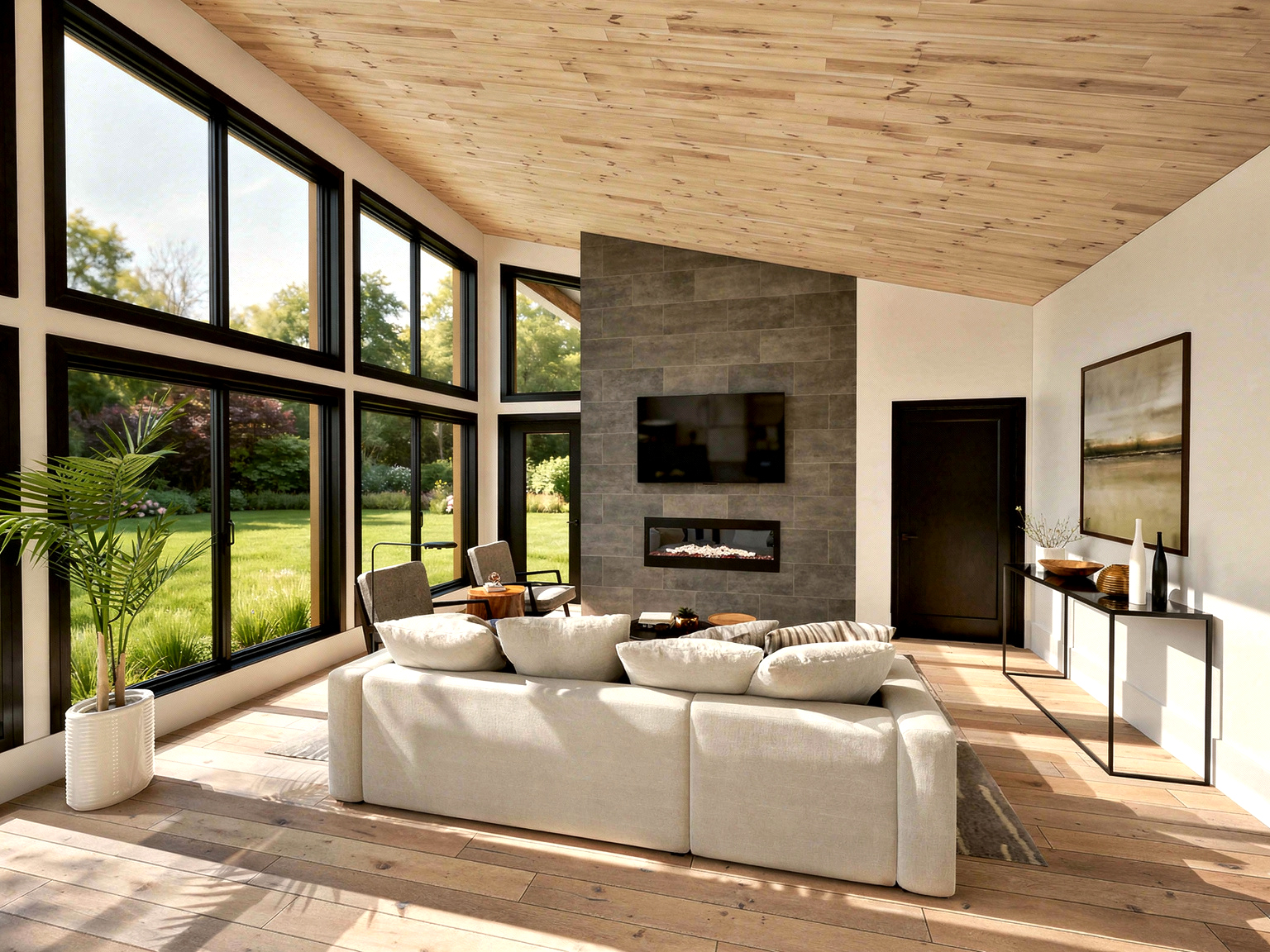
2. Smart Window Layouts:
Large windows are a defining feature of modern homes, bringing in abundant natural light and framing expansive views. When thoughtfully placed, they elevate the home’s aesthetic while supporting well‑being and strengthening the connection to nature.
Choosing the right window style influences curb appeal, functionality, and window‑treatment options. European‑style tilt‑and‑turn windows, for example, offer an innovative alternative to traditional casements, providing easy cleaning and enhanced ventilation.
For large windows—especially those spanning two storeys—light control becomes an essential consideration during the build. Planning for motorized blinds or draperies at the framing stage allows these systems to be seamlessly integrated for optimal comfort. Many home automation platforms can also synchronize window‑treatment functionality.
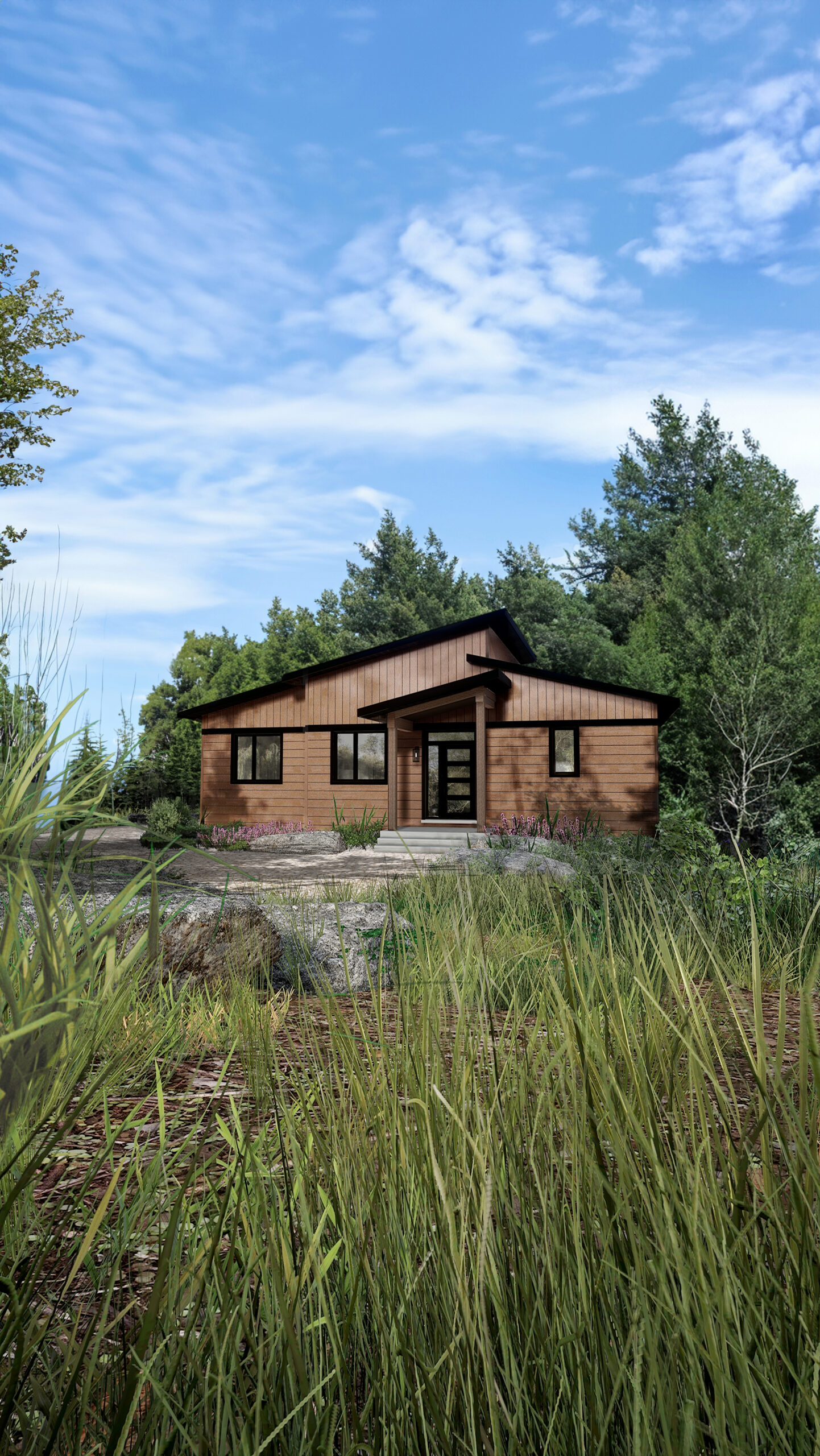
3. Integrating Technology for Comfort and Security:
Integrating cutting‑edge technology is a hallmark of contemporary home design. Connected appliances, smart locks, and automated irrigation systems allow technology to blend seamlessly into the daily function and maintenance of modern homes. Voice‑activated assistants, energy‑management tools, and advanced security features further enhance convenience and peace of mind.
Today’s home technology also prioritizes sustainability and smart living. From energy‑efficient appliances to solar panels, integrated automation systems help monitor and maintain a more efficient, environmentally conscious home.
4. Open Concept Homes that Work:
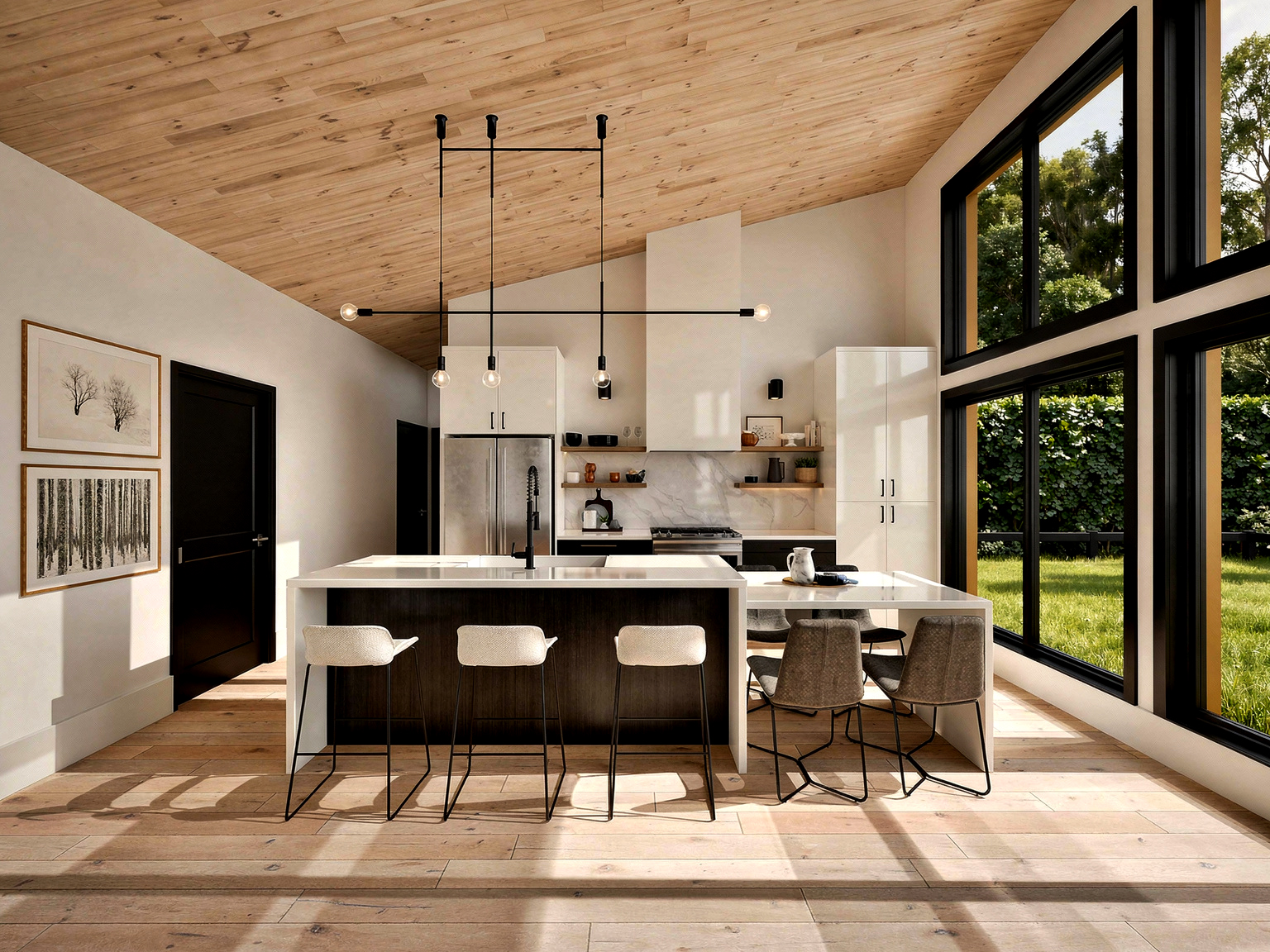
Modern homes are often defined by open spaces that can adapt to evolving needs, becoming a family gathering hub, a home office, or a casual entertaining area as required.
Multipurpose zones, whether designed for work, fitness, or leisure, are most effective when considered early in the planning process. The goal is to introduce subtle separation without compromising openness. Elements such as two‑sided bookcases, a central fireplace, or architectural accent screens can create distinct areas while maintaining flow and supporting functional furniture placement.
Sliding partitions, modular furniture, and other adaptable features further enhance flexibility, allowing spaces to evolve over time. The result is an open‑concept home that feels intentional, organized, and aligned with a modern lifestyle.
5. Detailing like a Minimalist:
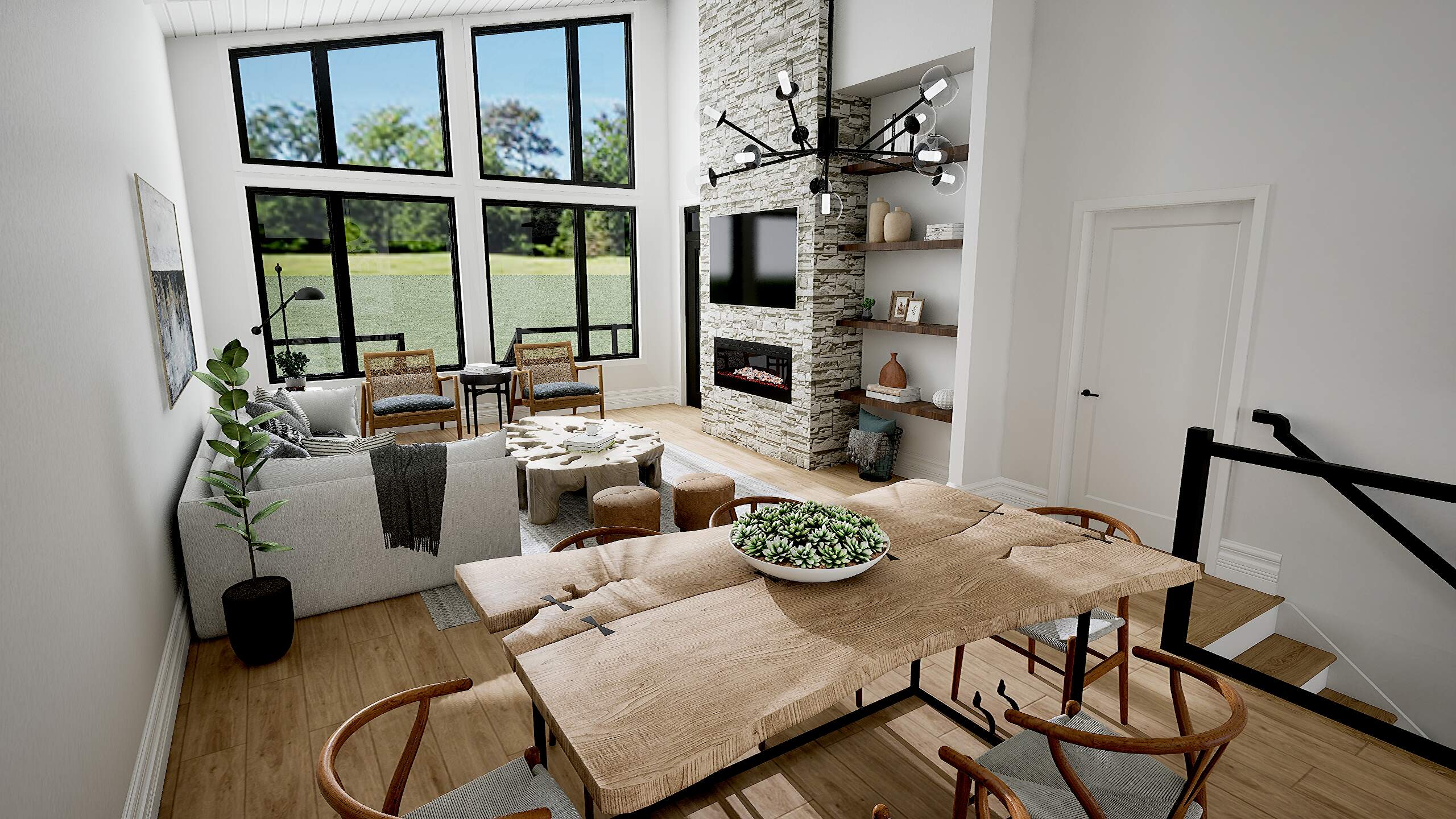
Minimalism often defines modern interiors, yet there are still countless ways to incorporate refined, intentional detail throughout a contemporary home.
For new builds or major renovations, streamlined baseboards, door casing, and interior doors create a sophisticated architectural canvas. Squared or chamfered profiles, slab or shaker doors, and drywall returns around openings reinforce a crisp, modern expression.
Cabinet doors outfitted with touch latches or integrated handles, rather than traditional pulls or knobs, create a refined, uninterrupted aesthetic in kitchens and bathrooms. Open shelving can showcase curated dishware and frequently used items, adding warmth and complementing the vertical drama of high ceilings.
While a unified colour palette sets a calm, modern tone, many homeowners introduce contrast through distinctive art and statement furniture. These unexpected touches bring depth and individuality to minimalist spaces.
6. Materials that Support Modern Living:
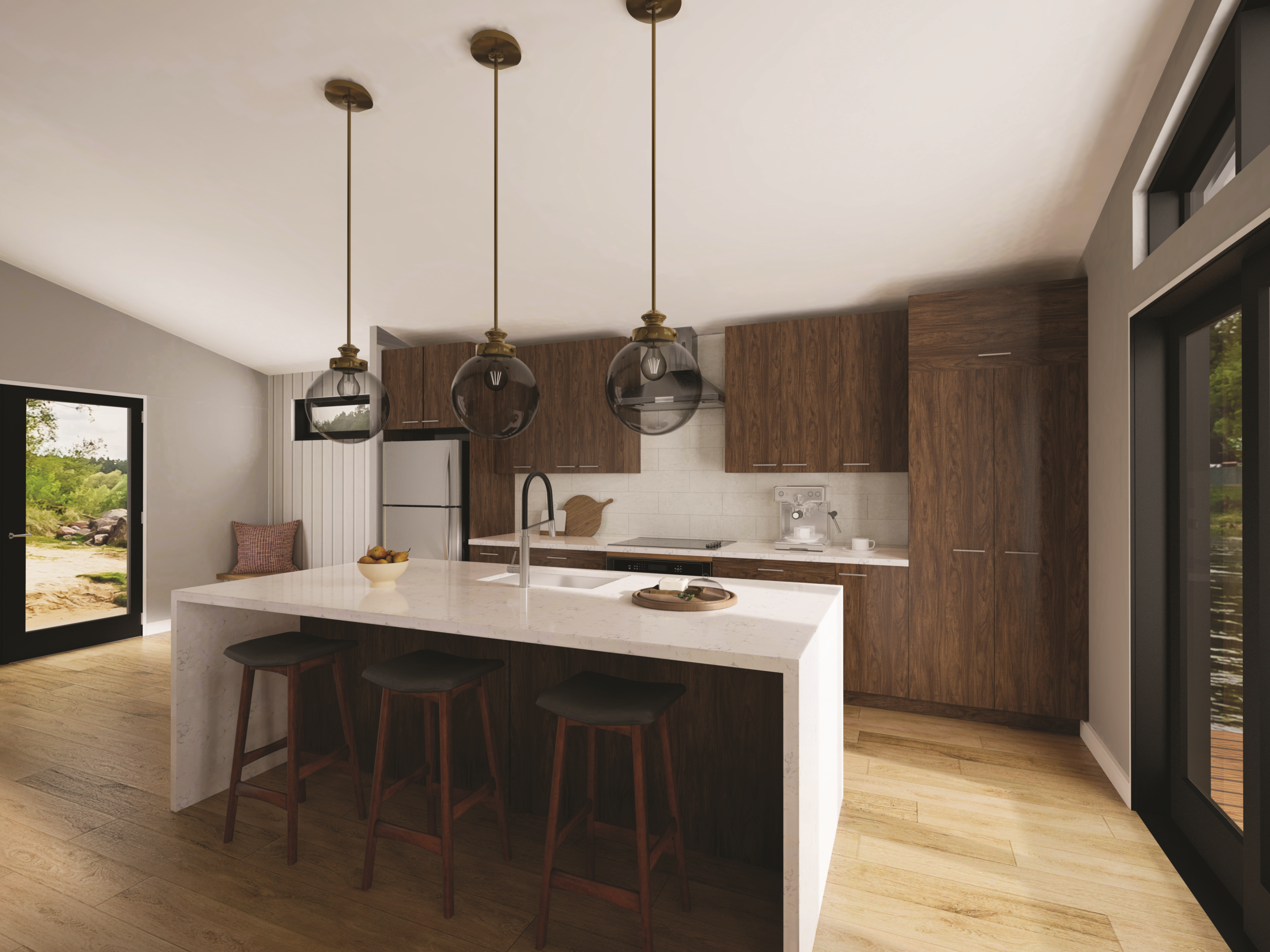
Wood, metal, and porcelain remain foundational materials in modern interior design, each offering a distinct balance of warmth, durability, and refinement.
Wood: Engineered wood flooring, tailored cabinetry, and architectural ceiling beams in natural finishes help ground and enrich modern interiors. On the exterior—where longevity and maintenance are key—architectural wall panels, siding, and soffits in highly realistic wood‑look finishes are frequently used to achieve a warm, contemporary aesthetic with added durability.
Metal: Modern light fixtures, streamlined cabinetry hardware, and minimal stair pickets introduce a contemporary, subtly industrial edge when finished in metal. Matte and brushed finishes are especially versatile, pairing effortlessly with a range of materials while requiring minimal upkeep.
Porcelain: Celebrated for its strength and resilience, porcelain is now used well beyond traditional tile applications. Large‑format porcelain slabs have become a sought‑after choice for countertops and feature walls, including fireplace surrounds. With heat‑ and stain‑resistant performance and convincingly realistic stone visuals, porcelain is an elevated and highly practical material for modern interiors.
In this new and exciting era of home design, innovation and functionality go hand in hand. With the introduction of breathtaking roof designs, the seamless integration of technology, and continued demand for flexible layouts, homeowners have a myriad of options for designing living spaces that are both aesthetically pleasing and tailored to their individual lifestyles. As we continue to push the boundaries of what is possible in architecture and design, the homes of the future promise to be a harmonious blend of art, functionality, and sustainability.